Showing posts with label Harper Lee. Show all posts

Sunday, September 6, 2015

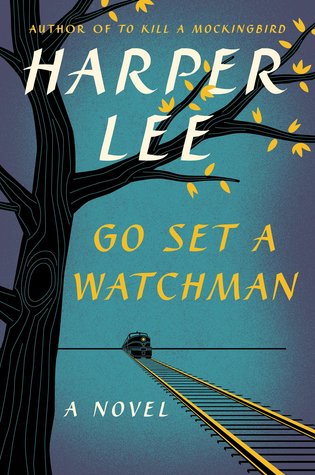
Harper Lee's "Go Set A Watchman"...A Book Review

Go Set a Watchman*

I only finished Harper Lee's masterpiece, To Kill A Mockingbird just last year. Like many people, I was both excited and apprehensive to read Go Set A Watchman. Will it live up to its predecessor? Honestly, how could it? There was also the circumstances surrounding the way the book came to be. I haven't done a lot of research into it, but the way the book came to be published is very interesting.

I also tried to steer clear of other reviews; I didn't want my opinion to be tainted by theirs. For the most part, I succeeded. I heard a little bit about the book, mostly how Atticus is portrayed. For me, I saw something in not only his portrayal, but the book in general. 

The book centers around Jean Louise (Scout) returning to her hometown in her twenties. She travels from New York as a woman who moved and left behind the simpleness of her past life. She's now a sophisticated woman, a knowledgeable woman, a changed woman. She finds that the life she knew has not only changed, but may have not existed in the first place. What she sees in her hometown and the people living there--especially her father, Atticus, disgusts her. She is horrified by what her town has become.

The book, whether deliberate or not, erases the innocence of of our shared experience. Most read Lee's first book while in grade school. The story was simple, good vrs evil, right vrs wrong. We admired Atticus Finch because of his integrity. We saw him through the eyes of Scout and understood that fathers should possess at least some of his qualities.

But just as happens in Go Set A Watchman, we now realize that even if things existed like they did they way we remember them, all things change. It's hard to imagine that life in the segregated south could possibly be considered a simpler time, and perhaps To Kill A Mockingbird was a look at the innocence of it all. Of course, when we look back on the events of then and now, it's never been simple, never did it have a sense of innocence. Lee uncovers truth for us all to see and reminds us that these issues have always been more than what we think we see on the surface. I'm going to read this again, but first, I think I'll read her other book. I know I'll learn more from each the second time around.

* Photo used without permission from: https://www.blogger.com/blogger.g?blogID=5964635297586456513#editor

Wednesday, August 13, 2014

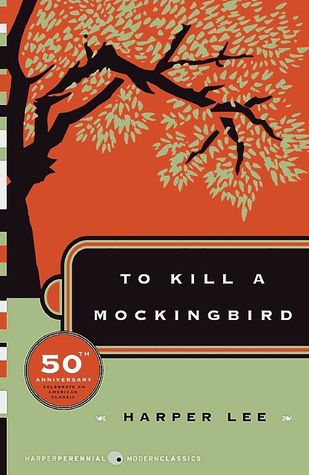
Some Thoughts...On Harper Lee's "To Kill A Mockingbird"

2657*

Remember those books everyone read in high school? Remember when by uttering a name, like: Tom Sawyer, Hermione Granger, Mr. Heathcliff, Homer, Atticus Finch or Elizabeth Bennett, conjured images in not only in your own mind but in the minds of others with whom you communicate?

There’s a curriculum of education that says (and I’m paraphrasing here…) that if you require children to read the classics, works of literature that have been held up as worth-while reading for decades and even centuries, they will have an incredible education. The result of reading these is that if they read the classics, their minds will instantly understand complex philosophies or moral quandaries or age-old conflicts that have confronted man forever. When I was first heard of this curriculum, I questioned it. I wondered how much value could there be in reading Uncle Tom’s Cabin when I understood the basic premise. Sure the kids would have read great literature, but how much of an “education” would have really have learned?

I didn’t understand because I hadn’t read a lot of classics, and now, each time I read a classic or a wonderful, time-tested literature, I understand more the value in this educational philosophy.

This week I added to my own personal “education” another example. I finished a book I should have read 35 or 40 years ago. I finally read Harper Lee’s To Kill A Mockingbird.

I thought I understood the book. I thought I understood what was contained within the printed pages, so I didn’t really feel I needed to read the book. I could not have been more wrong. To me, the most powerful aspect of the book is in the innocent narration of a child, looking at life and the evil—and good—of mankind she sees. I believe it resonates to the degree in which it does because as all of us age, we each realize at some point that life is not fair and true evil exists in the world. At at the same time, Scout has as an example a man of character, of morals, someone to show her that goodness is attainable and should be the goal.

There’s not much more I can say that hasn’t already been written about this work. My hope is that in the decades—and even centuries—to come, if someone says that a particular person is like a, “modern-day Atticus Finch,” that everyone will instantly know what that means. 

* Photo used without permission from: https://www.goodreads.com/book/show/2657.To_Kill_a_Mockingbird?from_search=true